When it comes to "social
technographics" I fall under the spectator, joiner, and conversationalist
sections of Bernoff’s ladder when participating in the online world (2010).
Like 70% of the study who are considered spectators, I enjoy reading and watching
online content more than creating and publishing it (Bernoff, 2010). But the way you
participate online drastically affects your personal learning environment
(PLE).
My current PLE was never
critically analyzed prior to this course. After reading and watching the
assigned resources, I decided to create my PLE based on Malan’s categorizes
which are aggregate, organize, collaborate, connect, and create (2010). My PLE
focuses on 3 main categories: organize, connect, and create. I tend to use (and
sometimes even depend on) my Samsung Galaxy’s calendar and to-do list to
effectively organize my life, both for educational and personal purposes. Using
these built-in task management smartphone applications help me plan and
organize my busy schedule while reminding me of important upcoming events such
as when assignments are due or exams are to be written. Connecting with others is another main
category I use to create an effective PLE. I connect with others and therefore
learn through various social networking platforms such as Facebook, Instagram,
and Twitter on a daily basis. I use these social media tools to share and
collect information about others and the world itself. Additional web tools I
use to connect with others include e-mail, forums, and blogs; however these
tools are usually only used for academic purposes. The last category I use to
strengthen my PLE would be creating content online. By creating content, I can
share my knowledge with others and receive critical feedback. I use several
different tools to create various types of content. These tools include blog
websites, Windows Office (Word, PowerPoint, etc.), YouTube, Adobe Premier,
Adobe Photoshop, and more. These specific tools assist me in creating blog
posts, digital documents, videos, photos, and other content, to share with the
online world. The other 2 categories that Malan encourages to use in order to
create an effective PLE are aggregate and collaborate however, I have yet to
use these techniques to further my learning but plan to by the end of this
course.
When beginning to create a more
effective PLE consider 4 elements: personal, learning, environment, and habits.
In 5-10 years from now, I want to be an educated and hardworking citizen who is
a successful entrepreneur who travels worldwide. I wish to be confident,
productive, and efficient in my technological skills considering these skills
are critical for success in today’s new media environment we live in. Right now I would like to be more educated and
less procrastinating while finding a healthy balance between my educational and
personal life. In order to get to where I wish to be, I need to learn and/or
improve many skills and attitudes. This includes becoming more motivated,
finding the right environments to network within, and effectively utilizing new
media to help me grow. To meet these learning needs I must work on changing my
environment. By changing my environment, I may be introduced to the skills and
knowledge to get where I wish to be. But what if I may not need to “change” the
environment but instead simply create new environments that provide better opportunities
to learn and grow? Good habits needs to be created such as seeking opportunities
to network, while bad ones needs to be broken like minimizing distractions such
as cell phones when doing my school work.
After creating my current PLE and
the WordCloud of Post #1, I realize I still have a lot to learn in the new
media environment. I am happy with how far I have come in my digital learning considering
how ubiquitous digital learning has become in the educational system in North
America but believe there is always room for improvement (Attwell, 2007). I
would like to further enhance my PLE by incorporating Malan’s aggregate and
collaborate categories into my environment. Although I may not know how to do
so just yet, I am confident that after this course I will have the necessary experience
and tools to easily integrate these 2 categories into my future PLE.

Worboys, J. (CC) 2014.
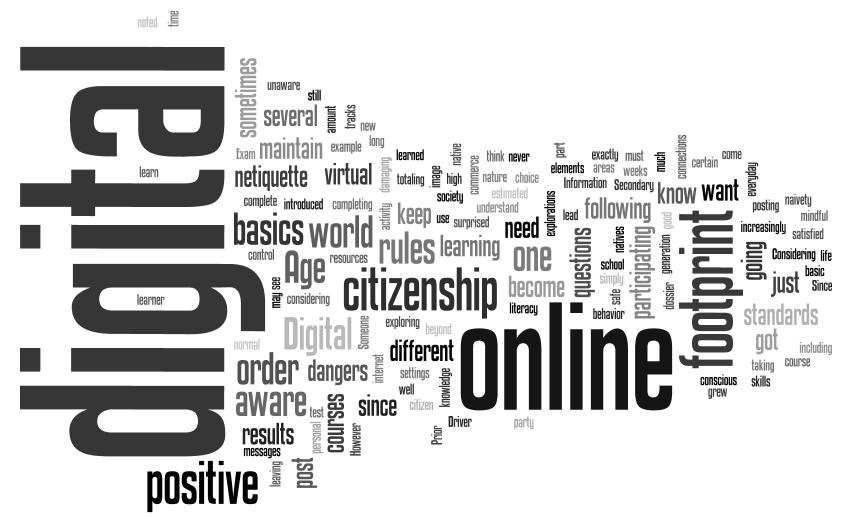
Worboys, J. (CC) 2014.
References
Attwell, G. (2007). The Personal Learning Environments: The future of eLearning? Retrieved from http://www.elearningeuropa.info/files/media/media11561.pdf
Bernoff, J. (2010). Social Technographics: Conversationalists get onto the ladder. Retrieved from http://forrester.typepad.com/groundswell/2010/01/conversationalists-get-onto-the-ladder.html
Malan, A. (2010). Growing your Personal Learning Environment. Retrieved from http://prezi.com/-xhpuupxgjin/growing-your-personal-learning-environment/

No comments:
Post a Comment